
Stylist Chatbot UI Design
This project explores the UI design of a fashion stylist chatbot that brings a fashion stylist experience to e-commerce platforms. Integrated directly into a retailer’s website. the chatbot helps customers discover relevant products through guided conversation and visual recommendations.
The Challenge
The challenge was to design a clear and intuitive chatbot interface that delivers personalized fashion recommendations without overwhelming users. In addition design the stylist avatars and supporting illustrations to humanize the interaction.
My Role
UI Design | Visual System | Component Design | Avatar & Illustration Design | Interactive Interface Design
Team
Co-founders | Product Owner | UX Designer | Engineering Team
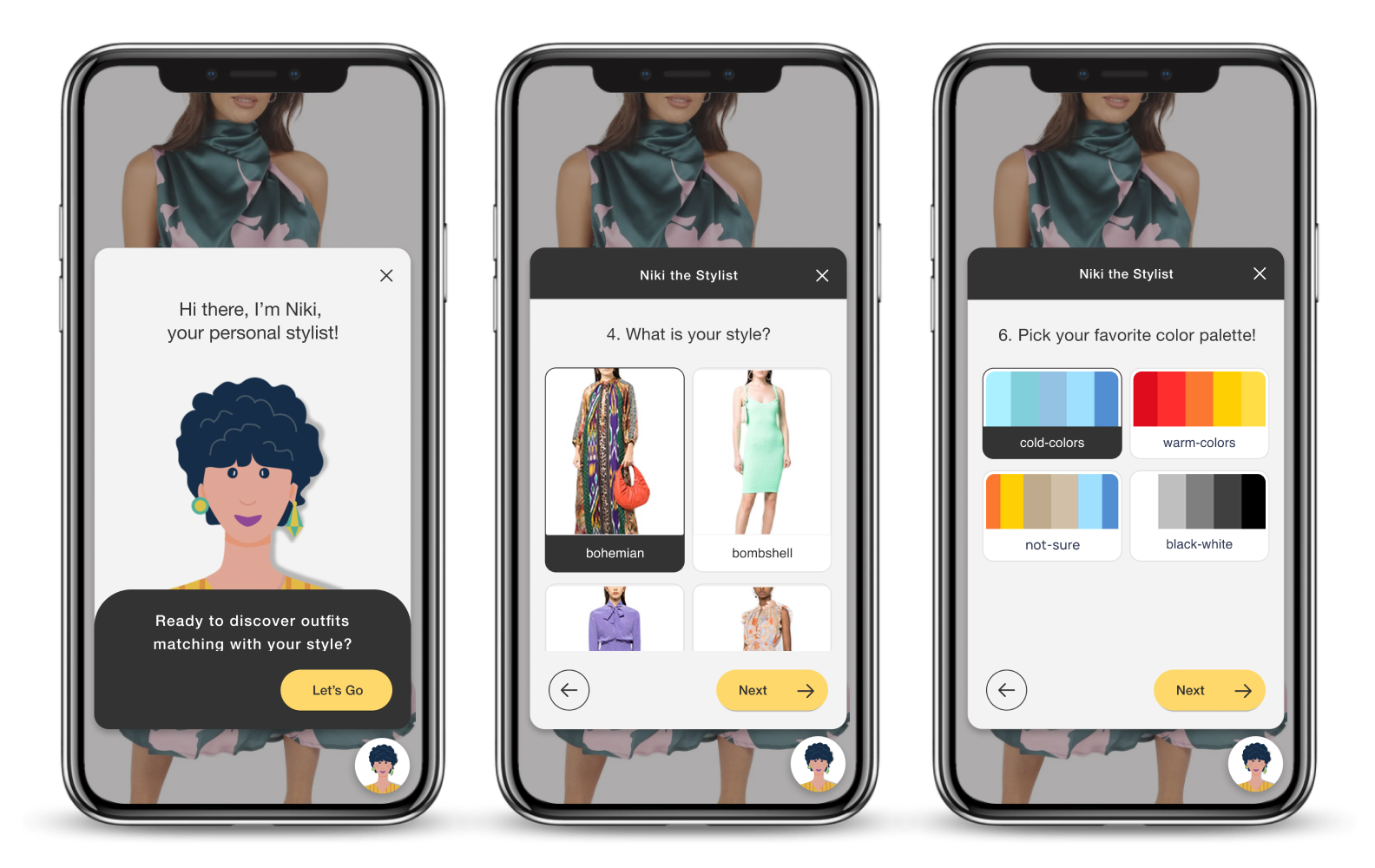
UI Design Strategy
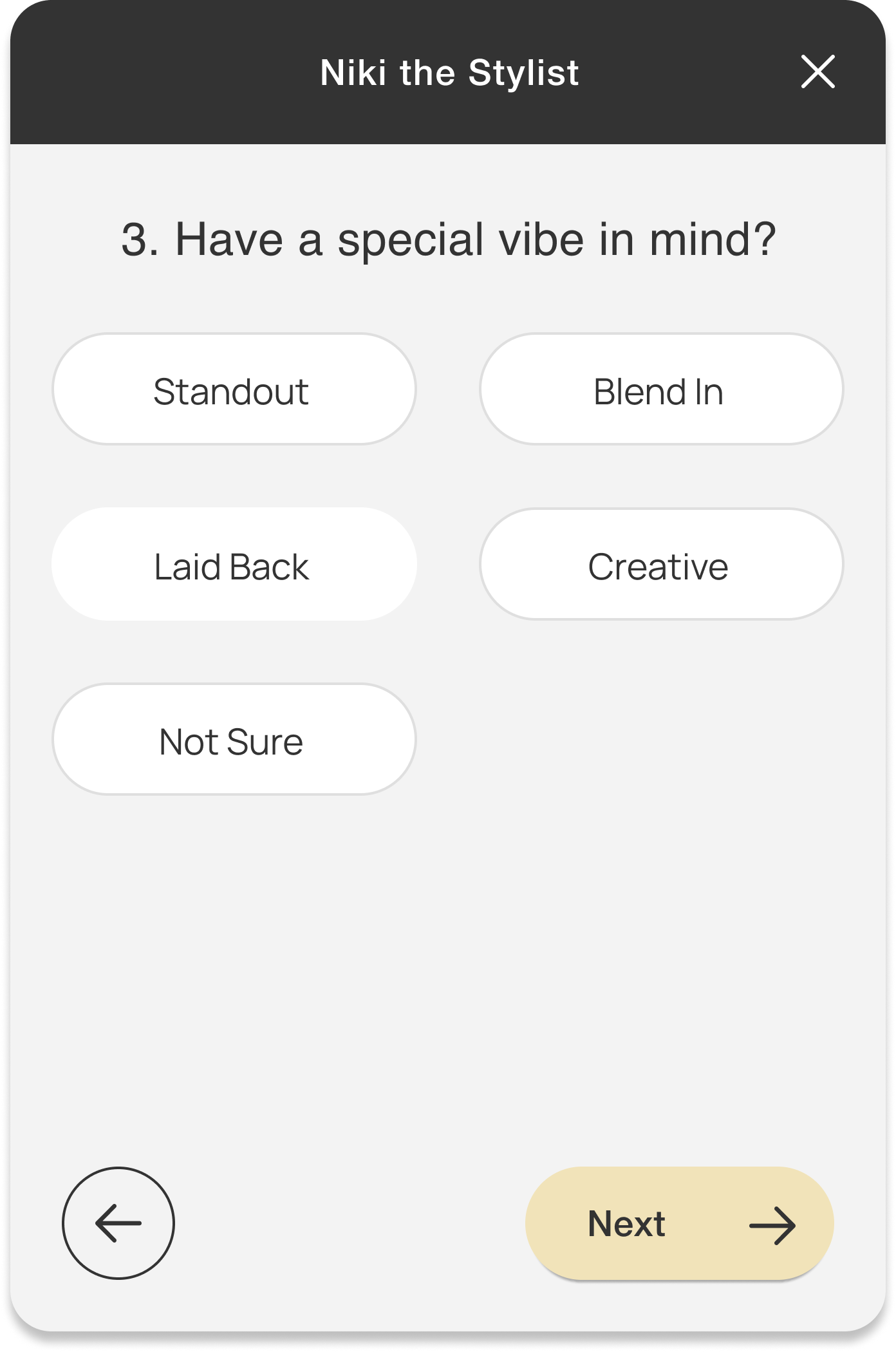
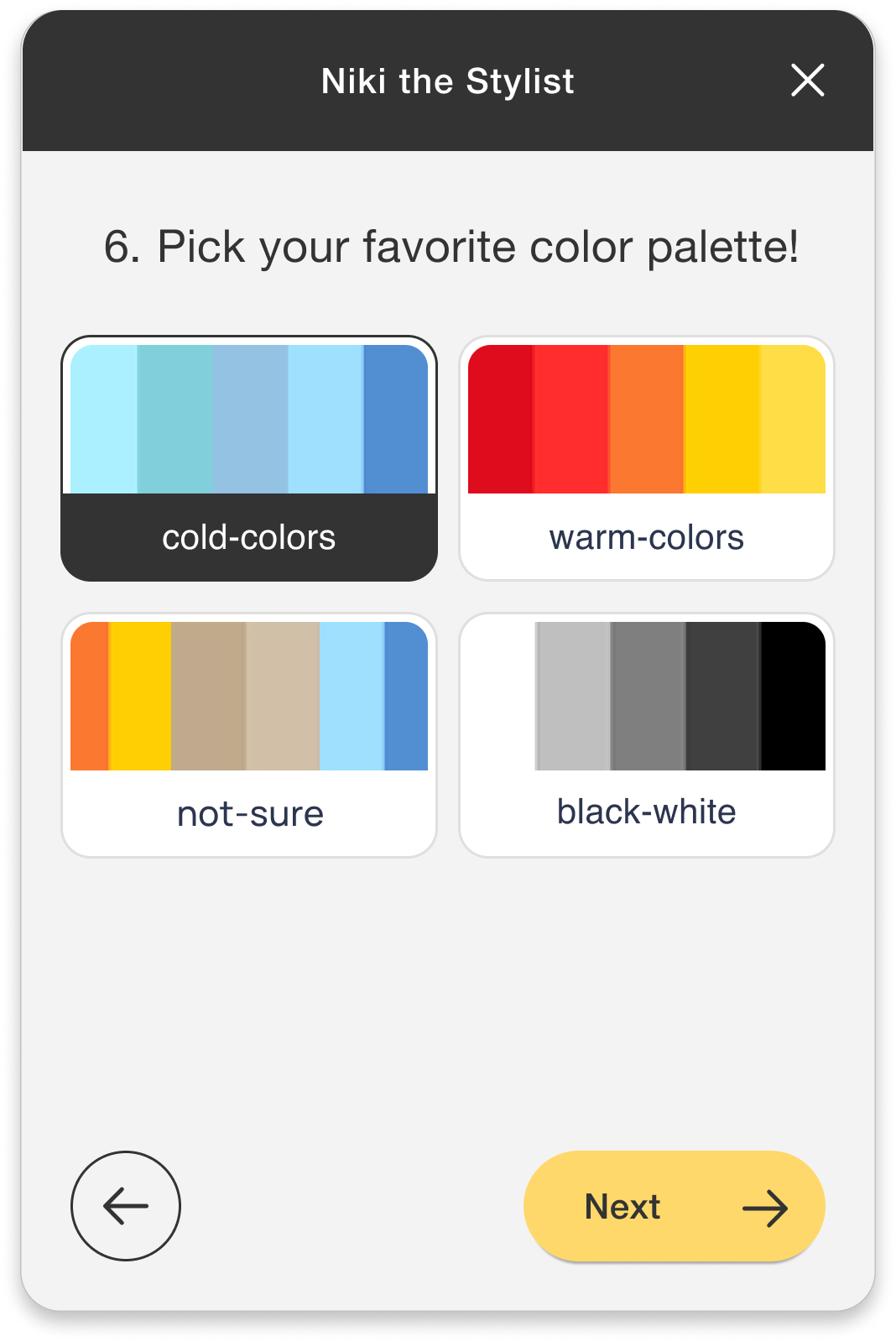
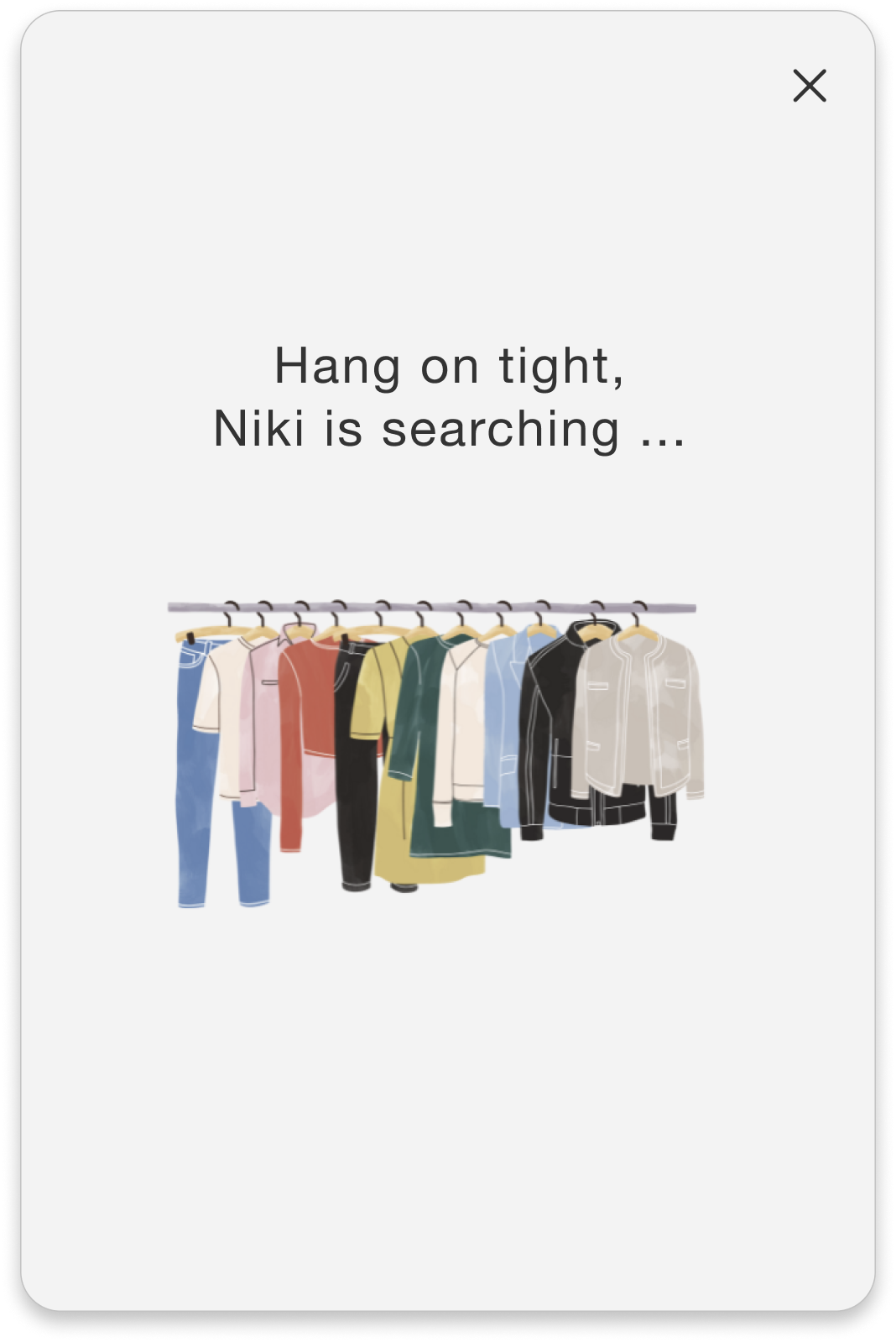
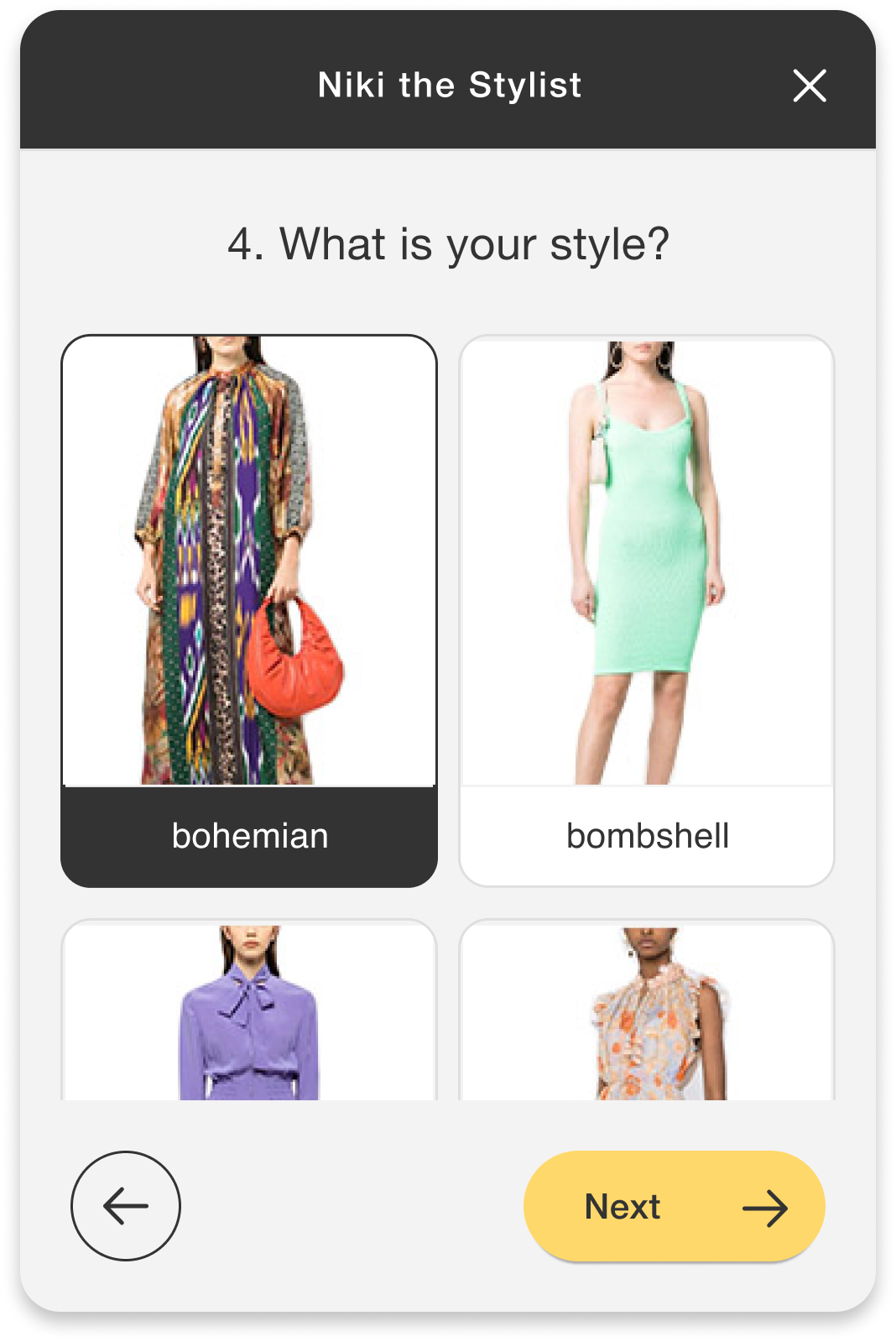
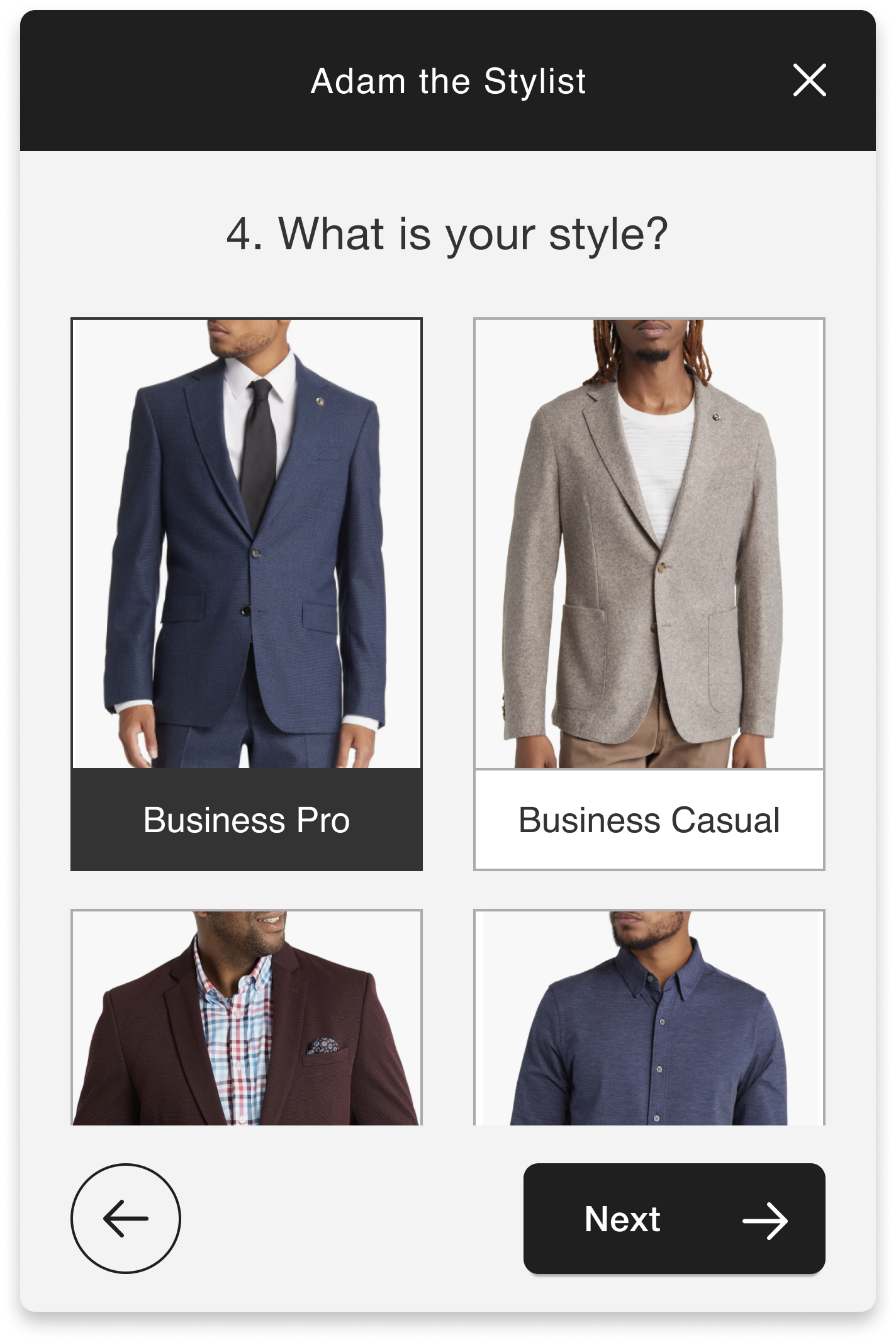
The interface was designed to feel conversational yet structured, balancing natural chat interactions with clearly defined visual components. The goal was to guide users step by step while maintaining visual clarity and reducing cognitive load on small screens.
Key UI principles:
Short, guided interactions instead of open-ended input
Strong visual hierarchy to separate conversation, prompts, and product content
Reusable components to ensure consistency across flows



Research on Avatar Styles
Two dominant chatbot styles emerged:
Minimalist Robotic Icons – Sleek and futuristic but impersonal.
Character-Based Illustrations – Approachable but often generic.
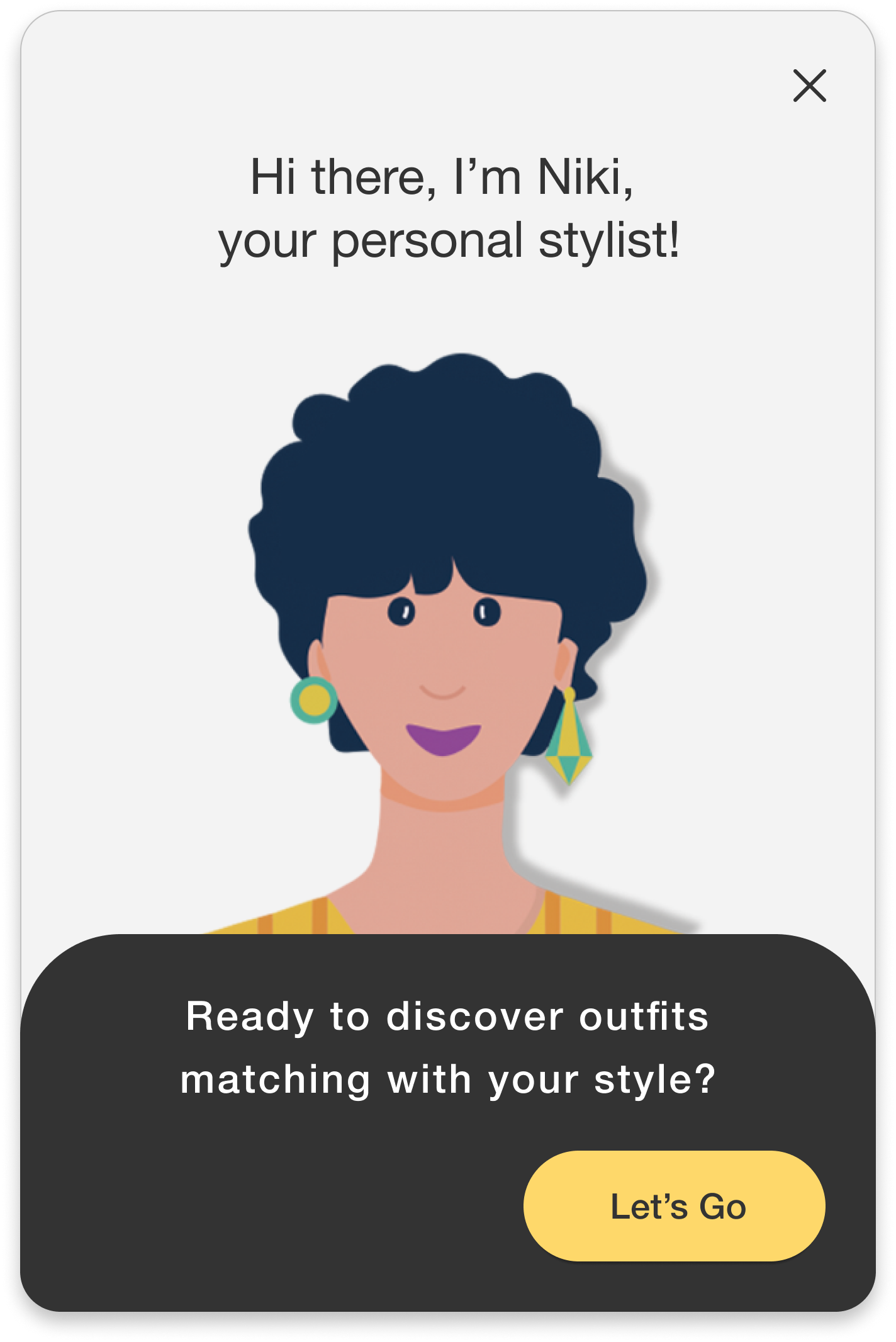
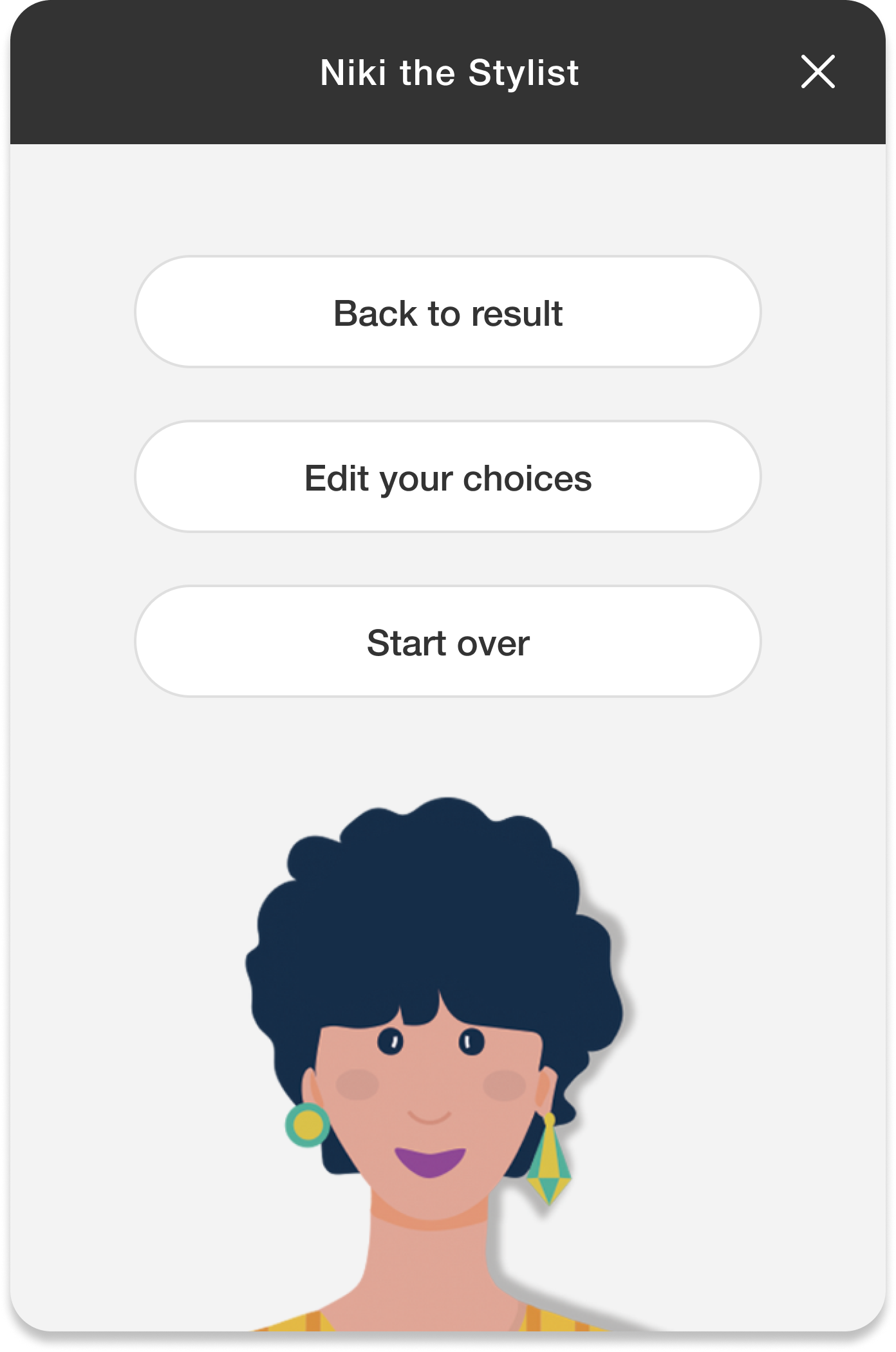
Several stylist avatar options were explored to balance approachability, professionalism, and visual restraint. The final direction was selected based on how well it integrated into the chat interface without competing with product content.
Designing an Engaging Avatar
To humanize the experience, a stylist avatar was designed as a visual anchor for the chatbot. The avatar needed to feel friendly, stylish, and professional without distracting from product discovery.
The visual language combines:
Soft shapes and restrained color usage
Editorial-inspired illustration style
Minimal facial expressions and gestures to convey warmth and confidence
The avatar reinforces trust and creates a more personal connection, helping users feel guided rather than automated.

Customizing the Interface for E-Commerce
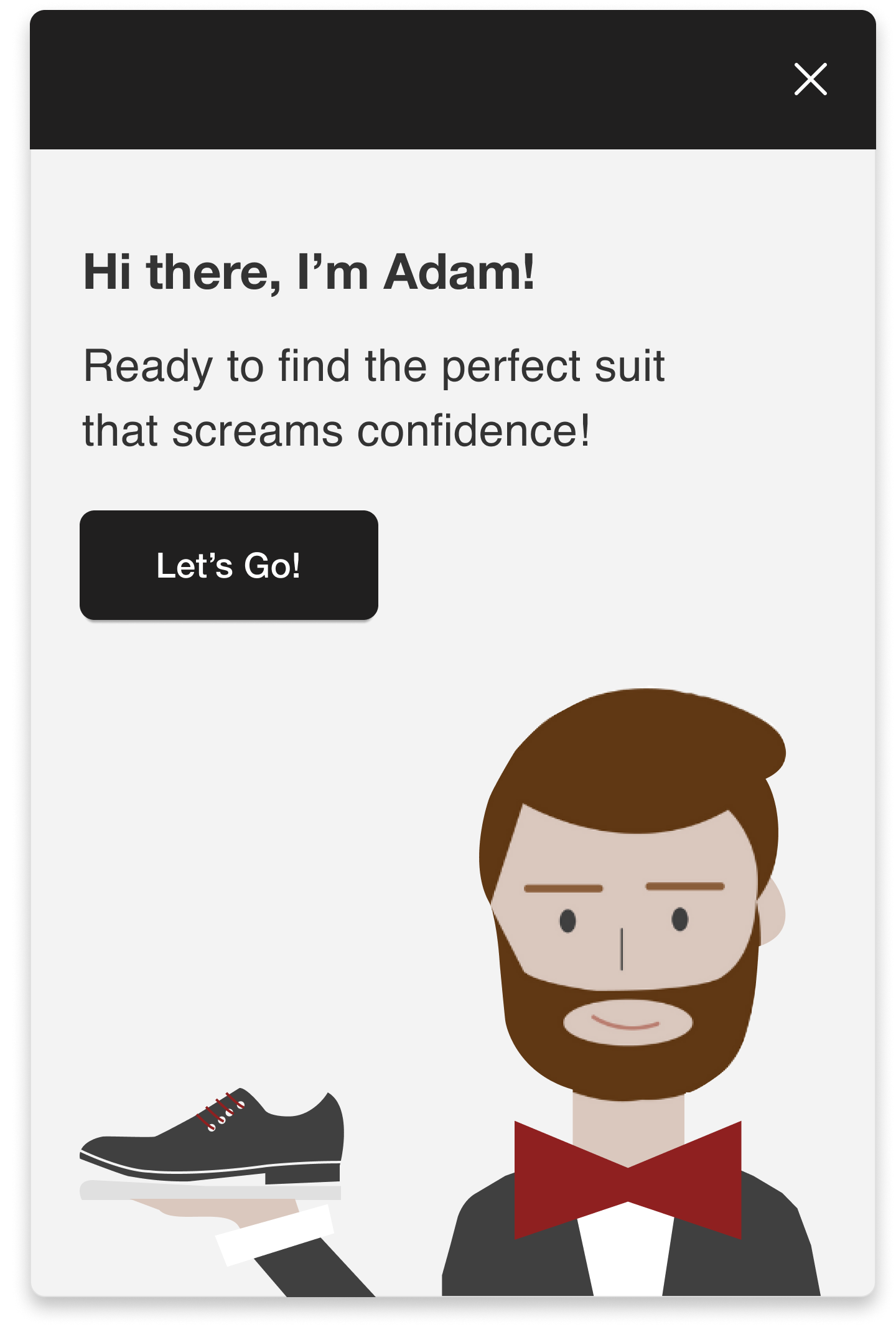
The chatbot UI was designed to adapt to different e-commerce environments and brand identities. To support varied retailer needs, the interface allows for flexible theming while maintaining consistent interaction patterns and component behavior.
This flexibility enables the chatbot to integrate seamlessly into existing platforms without disrupting established brand experiences.
Result
The chatbot successfully introduced a stylist-led interaction within apparel e-commerce environments, engaging first-time visitors and generating valuable insight into customer preferences. While conversion impact was limited in early-stage deployment, the project highlighted key considerations for designing scalable, adaptable interfaces in commerce-driven products.
Key Insights
Design for Flexibility: Modular components enabled customization across different e-commerce platforms and brand identities.
Minimalism Enables Integration: A restrained visual language ensured the interface could adapt to varied retail environments without visual conflict.
Scalable Systems Matter: Variable UI components supported efficient iteration and future expansion as product needs evolved.